
Posted by the team at Notestone Reserve
If you’ve spent any time online lately — and statistically, you have — you’ve probably seen the phrase.
Touch grass. Originally internet slang for “log off, you’ve been on here too long,” it started as a gentle insult and turned into something else entirely. In 2025, people started taking it literally. Searches for “digital detox ideas” are up 72%. There’s an app — genuinely — that blocks your social media until you take a selfie outside. Pinterest’s summer trend report basically described the entire season as: put the phone down and go outside.
Gen Z, in particular, is serious about getting offline and reconnecting with the world around them. But it isn’t just Gen Z. 28% of adults report being online “almost constantly,” and the cost is becoming increasingly clear: anxiety, poor sleep, burnout, and disconnection from the present moment.
Everyone, at some level, knows they need to touch grass. Most people just don’t know where to go.
We have a suggestion.
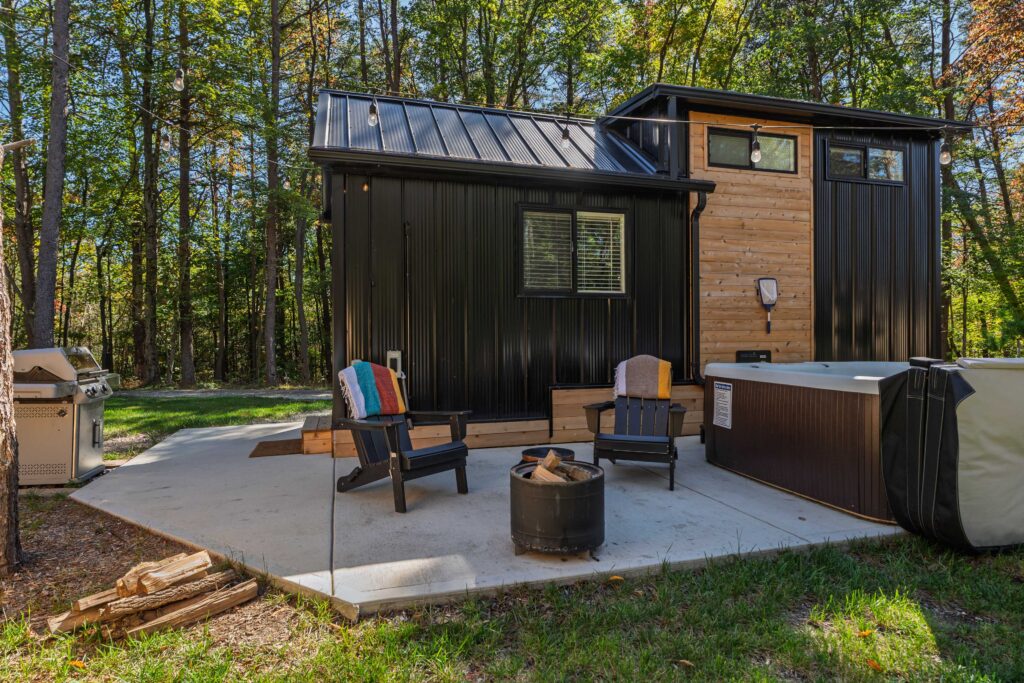
What it actually feels like to unplug here
There’s a specific thing that happens at Notestone — we’ve watched it enough times to recognize it as a pattern. Guests arrive Friday evening in full city mode: phones out, checking notifications, half-present. By Saturday morning something has shifted. By Saturday night, someone is sitting at the fire pit not taking a photo of it. Just sitting there. Watching it.
That’s the thing about being somewhere with actual quiet and actual dark and actual air that smells like woodsmoke and whatever the forest is doing — the pull of the screen gets weaker. Not because you decided to put it down, but because something better filled the space.
Hocking Hills does this more effectively than almost anywhere we know. Here’s why.
The park demands your attention
Old Man’s Cave is not a passive experience. The gorge is narrow and the trail has stairs and bridges and the kind of terrain that requires you to watch where you’re stepping. You are physically present in a way that a walk around a city block doesn’t require. The sandstone formations and the waterfalls and the hemlock canopy closing overhead — these things don’t compete with your phone. They simply outrank it.
Ash Cave stops people. There’s no other way to describe it. You walk through a gorge lined with hemlocks and then the narrow path opens into a horseshoe-shaped cave 700 feet wide and 90 feet high, with a waterfall running over the rim. The first thing most people do is stand still. The second thing most people do is notice they haven’t checked their phone in 45 minutes.
That’s the grass. That’s what you came to touch.
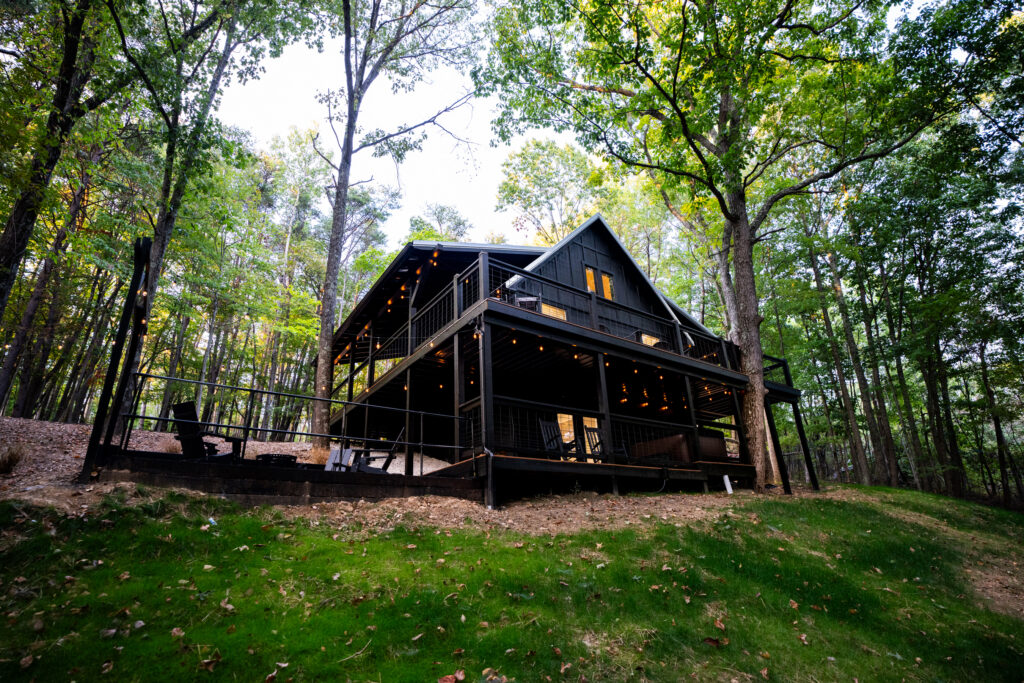
Our WiFi is, honestly, a feature
We say in our listing that the satellite WiFi can be temperamental. We mean it, and we’ve made peace with it.
Spotty WiFi is not a bug in a Hocking Hills trip. It is, in a very real sense, the product. The guests who lean into it — who treat the weak signal as permission to actually be where they are — consistently describe their stays as the most restorative trips they’ve taken in years. The guests who spend energy trying to work around it have a fine trip. But they didn’t really touch grass. They just touched grass-adjacent content.
What to do with yourself instead
If you’re going to properly disconnect, you need a plan — not a schedule, but a loose sense of how to fill the hours that the algorithm usually fills for you. A few things that work:
Go on a trail you haven’t done before. Not the famous one. Pick Cantwell Cliffs or Rock House — somewhere you have no existing photo of, no mental image from someone else’s Instagram. Experience it cold.
Watch the fire for longer than feels comfortable. There’s a reason humans have been doing this for approximately all of history. Give it twenty uninterrupted minutes. Something happens.
Float the Hocking River. A few hours on the water with no cell service is a complete reset. Your brain does not know what to do with itself for the first thirty minutes, and then it figures it out.
Leave your phone in the cabin for one full morning. See what you notice.
The irony is not lost on us
We’re aware that you’ll probably read this post on your phone. That you might share it. That the hashtag #touchgrass will appear in the caption of a photo someone takes of the fire pit, which means a phone was present. The whole loop is a little absurd.
But there’s something real underneath the meme. The craving for actual nature, actual quiet, actual presence — it’s not a trend, it’s just a human need that a lot of us have been neglecting for a while. Hocking Hills has been meeting that need, quietly and without fanfare, for a long time.